
12 Tips for Air Travel with Chronic Pain & Fibromyalgia

Looking for tips to survive air travel with chronic pain and fibromyalgia? You’re in the right place!
I have traveled to over 46 countries while living with fibromyalgia, chronic pain, and fatigue for over 20 years.
Not only am I an experienced traveler, but I am a chronic pain warrior, just like you!
I understand the stress of flying with fibromyalgia and I want to share tips that help manage my chronic pain during a flight.
Airplane travel is tough. Cramped, uncomfortable seats, lengthy lines, and long distances can add up to a very painful travel experience.
For people who battle chronic pain or illness every day, flying can be even more exhausting and strenuous. But that doesn’t mean you shouldn’t travel.
In this post, I share 12 helpful tips for how to survive air travel with chronic pain, fatigue, and fibromyalgia.
Let’s do this!
Plan Your Trip with My Favorite Resources
🔹Book the best hotels: Booking.com
🔹Find great flight deals: Skyscanner
🔹Reserve a rental car: Discover Cars
🔹Purchase travel insurance: InsureMyTrip
🔹Book a day tour: Viator
🔹Easily stay connected: Airalo
➡️Check out all our Travel Resources here!
12 Tips for Air Travel with Chronic Pain & Fibromyalgia
Yes, fibromyalgia and flying can be done. It is possible to fly with chronic pain and fatigue using these 12 travel tips.
1. Book Your Flight in Advance

When planning a trip with disabilities, or flying with a wheelchair, it is best to book your flight in advance.
Not only can this help save you money but it gives you the widest selection of seats to choose from.
✈️Consider Your Needs & Comfort:
✔️Close to the washroom
✔️More legroom
✔️Window or aisle seat
✔️Near the galley to stretch
Airline seats can be tight and cramped. An aisle seat allows you to extend your legs and stand up to stretch during the flight.
To best manage my pain during a flight, I choose a window seat.
A window seat offers more space to shift and move around. I can lean against the window with my travel pillow and put my legs over my husband to increase my comfort.
If you require an aisle wheelchair to get into your seat, make sure to request this when booking your flight.
✅HELPFUL TIP: When planning a trip, consider booking a layover if the flight duration is long and will add to your pain.
When looking for the best flight deals, we recommend Skyscanner.
👉Find the Best Flights with Skyscanner
✔️flexible search options
✔️easy to navigate platform
✔️compare multiple airlines
✔️find the best flight deals
2. Consider First Class

If you have the budget or use travel reward points, upgrading to business or first-class can significantly help manage your chronic pain and fibromyalgia while flying.
In our 12 years of traveling together, we could never justify the additional cost of a first-class ticket. We are teachers after all.
However, after the pandemic, airlines were doing what they could to get people flying again.
We planned to visit Greece and Malta for a 12-day road trip.
Air Canada was offering first-class seats to Athens at an affordable price. Our flight to Greece was 10 hours, so we decided to bite the bullet and see what all the fuss was about.
Let me just say… first class was worth every penny!
I arrived in Greece happy and rested. Being able to lie down and sleep saved me from the crippling pain and fatigue I usually experience after a long-distance flight.
Flying with fibromyalgia and chronic pain was more manageable in first class.
I was even able to visit the Acropolis and other famous Athens landmarks on our second day! In my opinion, this is the best way to survive air travel with chronic pain and fibromyalgia.
Although we can’t afford a first-class ticket every time we travel, we use the American Express Gold Rewards Card to collect travel reward points.
With a travel credit card, you rack up miles or points from your purchases that can be used towards travel. This can significantly offset the cost of a first-class ticket to your next destination.
3. Access the Lounge

When flying with chronic pain, take advantage of the airport lounge.
You have access to the airport lounge if you booked a business or first-class ticket. But that is not the only way!
The Priority Pass gives you access to over 1300 airport lounges worldwide. It is the perfect way to relax before your flight.
👉Buy your Priority Pass & escape the crowds here!
Airport lounges can provide extra comfort to people traveling with chronic pain, fatigue, fibromyalgia, or a chronic illness.
They offer comfortable chairs, a quiet space, Wi-Fi access, complimentary snacks, and hot/cold beverages. They are great for both productivity and relaxation.
✅HELPFUL TIP: Some credit cards also provide free access to airport lounges. It is worth looking into your credit card benefits.
4. Pain Relief Travel Kit


One of the most effective ways to survive air travel with fibromyalgia, chronic pain, and fatigue is to create a pain relief travel kit.
Include anything you need to manage your pain, alleviate anxiety, and distract yourself from the long journey ahead.
Whether I’m on a weekend getaway or a 2 week Netherlands road trip, here is what I use to make travel as easy as possible.
Essential Oils
Travel-size essential oils are a must. My favorite essential oils from Saje Natural Wellness.
➡️This carry-on sized pocket pharmacy includes everything you need for flying with chronic pain.
I use the Pain Release roll-on for back pain and the Peppermint Halo for headaches.
The Stress Relief roll-on is made with lavender, chamomile, and orange and is perfect for relaxation before any flight.
Comfortable Shoes
To survive air travel with chronic pain and fatigue, make sure to wear comfortable shoes, I love these Asics runners.
And always wear any orthotics you have them.
Airports are seriously gigantic. You want to provide as much support to your neck and back as you can.
➡️I highly recommend these Asics running shoes!
Travel Pillow
Although most airlines provide a pillow and blanket on international flights, I always bring my own when I travel.
That way, I have it when I need it and I know it’s clean!
Plus, I can use my travel pillow anywhere on my trip. So whether I’m riding a train in Japan, or driving in Mexico, it helps me manage my pain.
Entertainment
It is smart to bring a variety of entertainment with you. This will help pass the time and reduce any stress you may feel.
Easy flight Entertainment:
👉Book or magazine
👉Soduko puzzle
👉Deck of cards
👉Music or podcasts
👉iPad with games or movies
Some outlets on airplanes do not match the ones on your cell phone.
Consider purchasing a separate pair of earbuds or noise-canceling headphones to block sound and enjoy the in–flight entertainment.
5. Packing For The Trip

Most international flights include one piece of checked luggage in the price. You can also bring a personal carry-on onto the plane.
Medical Equipment
It’s important to note that you can travel with your own medical equipment, like a wheelchair or CPAP machine.
Most personal medical equipment is exempt from weight restrictions and will be placed in the luggage section once you are on board.
✅HELPFUL TIP: Always check the baggage rules and weight restrictions of standard luggage and medical equipment with your airline before booking your ticket.
Lightweight Luggage
Make sure to pack as light as possible. I know you’ve heard this before, but it’s true.
Whether you are headed to Iceland or visiting accessible sites in Greece, you do not want to drag around any more weight than you have to.
👉Check out our favorite Travel Resources here!
Packing light makes air travel and road trips easier.
For our two-week Puglia trip, we each had one carry-on suitcase that was easy to roll. And it made a world of difference!
👉Check out this post: How to Pack: 18 Packing Tips
6. Request Assistance if Needed

With my fibromyalgia, chronic pain, and fatigue, I cannot stand or walk long distances.
Airports are way too big for this old lady body of mine… yup, that’s what I call her.
If you have a chronic illness, flying with wheelchair assistance is the way to go!
You can add wheelchair assistance when you book your flight online or ask an airline representative when you arrive at the airport.
✅HELPFUL TIP: If you request a wheelchair when booking your flight, it will be waiting for you at the check-in counter. 😊
Some airlines prefer to have a representative accompany you. This means that someone will assist you through check-in, security, to your gate, and down the ramp to the aircraft.
A wheelchair will also be waiting for you when you disembark the plane at your destination.
This is extremely helpful since security or customs lines can be unbearably long.
Some airlines will allow your travel companion to push your wheelchair through the airport as well.
The Air Carrier Access Act ensures that you can use your wheelchair, scooter, or walker up until the aircraft door.
Your mobility device will be checked and waiting for you upon your arrival.
If you don’t require a wheelchair the entire way, many airports have motorized courtesy carts that can bring you to your gate once through security.
All you need to do is ask!
7. Provide Medical Documentation

It may be helpful to get a medical note from your doctor explaining your chronic pain or illness before you travel.
Providing a note to the airline or flight crew can help mitigate any possible issues and ensure you have the proper care before, during, and after your flight.
For example, if your fibromyalgia symptoms worsen when standing for long periods, a doctor’s note can ensure you get assistance to escort you to the front of the security line.
👉Additional Airline Accommodations:
✔️Access to a wheelchair or courtesy cart
✔️Assistance through security/customs
✔️Early boarding onto the aircraft
✔️Assistance with your luggage
With a doctor’s note, the flight crew may be able to offer accommodations, such as extra blankets, a more comfortable seat, or help to the restroom.
Take whatever steps are needed to best manage your chronic pain and fibromyalgia while flying.
All medications need to be in their original packaging from the pharmacy with your name written on the bottle.
This includes any other medicine you take to manage your pain, including Extra Strength Tylenol and Extra Strength Advil.
✅HELPFUL TIP: Always pack your medication in your carry-on bag, and never in your checked luggage in case it is lost.
8. Arrive Early & Avoid the Lines

Whether you are flying domestically, or headed to an amazing international destination like Malta, make sure to give yourself enough time at the airport so you do not feel rushed.
By checking into your flight online, you avoid the lineup at the check-in counter.
To make checking in easier, download the boarding pass to your phone.
And use a check-in kiosk to print your boarding pass and luggage tags.
We recommend arriving at least 2 hours early for domestic flights, and 3 hours for international flights. You want plenty of time to check your bags, get through security, and arrive at your gate.
Arriving early can also reduce any travel anxiety you may feel and allow you to relax at your gate before boarding.
You can also ask the ticket agent for assistance boarding the aircraft, changing seats, or for help loading your bags into the overhead bins.
✅HELPFUL TIP: The busiest travel days are weekends. Consider booking a flight mid-week to avoid long lines at check-in and security.
9. Inquire About More Space
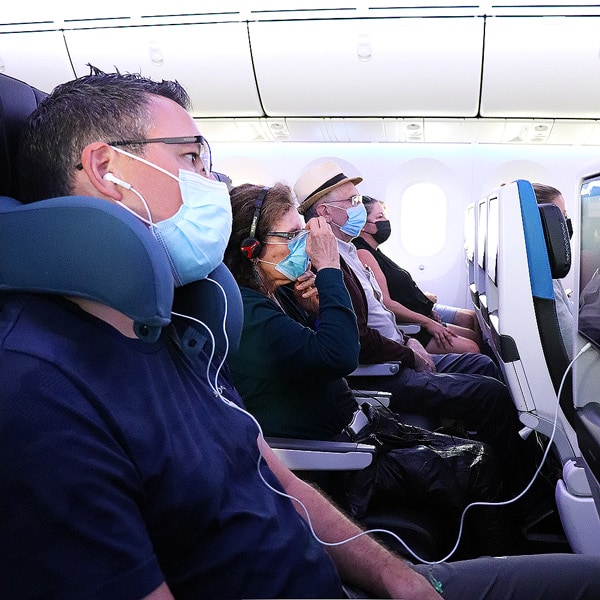

So simple, I know. But one of the most effective tips for flying with chronic pain and fatigue during a long international flight.
After arriving at the airport, I immediately inquire about empty seats on the flight. Even if we have already checked in online, I will explain my health situation to the ticket agent and see what accommodations are available.
In my experience, if the plane is not full and the ticket agent can do so, they will accommodate more space for me.
To survive air travel with chronic pain and fibromyalgia, having an empty seat beside you can make a world of difference. The additional space allows you to stretch out and, in some cases, the opportunity to lie down.
Asking for extra space could make the difference between visiting the best attractions in Valletta on day one or having to rest and recoup in the hotel room.
10. Stretch Before Your Flight

To reduce chronic pain and fatigue from air travel, it is a good idea to walk around the terminal before you board your flight.
This is essential on long international flights where you will be sitting for extended periods. Walking around and stretching will loosen your muscles and improve your circulation.
🧘♀️Airports with Yoga or Meditation Rooms:
✔️San Francisco International Airport (SFO)
✔️San Diego International Airport (SAN)
✔️Chicago O’Hare International Airport (ORD)
✔️Chicago Midway International Airport (CHI)
✔️Miami International Airport (MIA)
✔️Frankfurt International Airport (FRA)
✔️Schiphol International Airport (AMS)
✔️Helsinki Airport (HEL)
✔️Hong Kong International Airport (HKG)
If you have a longer layover, you may consider having a massage at an airport spa. For more info, check out this post about the 10 Best Spas at Airports Around the World.
Anything you can do to loosen your muscles in preparation for a long flight will reduce your pain and fatigue.
11. Load up on Water & Snacks

Staying hydrated is important for any traveler, as long-haul flights are notorious for their dryness and low humidity.
Consider bringing a reusable water bottle to stay hydrated. Although it must be empty of any liquids to go through security, you can usually fill it at a water station before your flight.
For added flavor, throw in cucumber slices, lemon, strawberries, thyme, or mint before you leave home. These ingredients are healthy and will ensure you have flavored water for your entire travel day.
✅HELPFUL TIP: Limit your consumption of alcohol, coffee, or tea during your flight. These beverages are diuretics and do not help to keep you hydrated.
Make sure to pick up a variety of healthy snacks before you board.
Even better, bring snacks from home to save on travel costs. Airport food is incredibly expensive, and choices are limited.
Adding watermelon, cucumbers, or berries as a snack is a good idea since they contain a lot of water and will help in your hydration efforts.
12. During the Flight: Recline, Walk, Stretch

To survive long-distance air travel with chronic pain and fibromyalgia, it is important to get up and move around the cabin frequently.
Although it may inconvenience other travelers, the goal is to manage your pain as best you can.
Sitting for extended periods can add considerable stress to your spine and back.
✅HELPFUL TIP: Get up from your seat at least once every hour. Head to the galley area where there is more space to stand and stretch.
You want to move your muscles as much as possible and keep your circulation up. This increases blood flow to your muscles and helps to alleviate stiffness.
Another strategy to improve blood circulation is to wear compression leggings or socks. This is especially true for anyone who experiences swollen legs, nerve pain, or circulation issues.
Compression socks or leggings apply pressure to the veins in your lower legs, helping to push the blood upwards so it doesn’t pool.
Since being diagnosed with POTS syndrome, I have found compression leggings very beneficial in helping to regulate my heart rate and improve my circulation.

FAQs: Flying with Fibromyalgia & Chronic Pain
Can you fly on a plane with fibromyalgia?
Yes, you can fly if you have fibromyalgia. To reduce and manage pain, you may want to request extra legroom or a seat closer to the restroom. Bring items to make yourself as comfortable as possible, stretch during the flight, and stay hydrated.
Does flying increase pain?
Flying can potentially increase your pain level. Prolonged sitting, limited movement, turbulence, and dehydration can lead to stiffness, muscle tension, and discomfort, which can worsen existing pain conditions.
Can you travel with chronic pain?
Yes, it is possible to travel with chronic pain. However, individuals with chronic pain may need to take certain precautions and make necessary accommodations to ensure a more comfortable and manageable travel experience.

Final Thoughts: Air Travel with Chronic Pain & Fibromyalgia
Surviving air travel with fibromyalgia, chronic pain, and fatigue starts way before you even board your plane.
And honestly, we all deserve to arrive at our final destination ready to relax and explore.
Hopefully, my 12 tips should help when flying with chronic pain and allow for a more relaxing and enjoyable long-haul flight.

Read More Travel Tips
Flying with a Wheelchair: How to Protect Your Mobility Equipment
How Chronic Pain and Fibromyalgia Changed the Way I Travel
How to Plan a Trip With Chronic Pain and Fatigue
Using an Aisle Wheelchair: Getting on a Plane as a Wheelchair User
12 Travel Tips: How to Save Money When Booking a Trip
14 Travel Tips: How to Spend Less While Traveling
