
Flying with a Wheelchair: How to Protect Your Mobility Equipment


Worried about flying with a wheelchair? I’ve got you covered!
Let’s be honest… the flight is usually the least favorite part of travel.
And if you use a wheelchair, flying can feel downright stressful! We’ve all heard the horror stories of wheelchairs arriving at their destination damaged beyond repair.
Thoughts like “Will my wheelchair get damaged?”, “What if there’s an emergency?”, or “How does wheelchair assistance work at airports?” are real worries — and sometimes even stop people from flying at all.
In this post, I share my own experience of flying with a wheelchair, plus practical tips on how to help protect your mobility equipment while traveling.
Let’s do this!
Plan Your Trip with My Favorite Resources
🔹Book the best hotels: Booking.com
🔹Find great flight deals: Skyscanner
🔹Purchase travel insurance: InsureMyTrip
➡️Check out all our Travel Resources here!
*This post was originally written by my friend and accessible travel advocate, Kristin Secor. I’ve since updated it with additional information and my personal experiences.
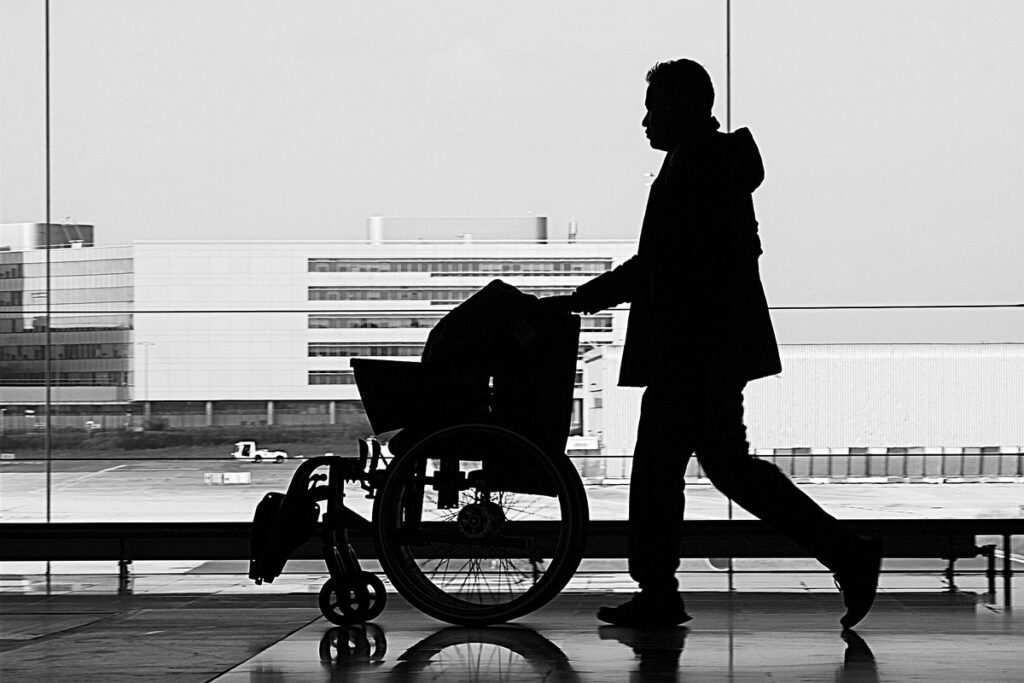
Air Travel with a Wheelchair: What’s Changing (& What’s Not)
A 2019 survey by Disability Horizons found that half of respondents hadn’t flown in the last five years because it was simply too much hassle.
It’s been painfully clear for a long time that airlines need to do more to meet the accessibility needs of passengers with disabilities.
Air Carrier Access Act
In the U.S., the ADA covers accessibility on the ground, while air travel with a wheelchair is protected under a different law: the Air Carrier Access Act (ACAA).
This law requires airlines to provide aisle wheelchairs, accessible restrooms (on planes with 60+ seats), and allow assistive equipment to travel onboard.
But there are still major gaps.
Major Gaps:
🚫No official emergency evacuation plan for wheelchair users.
🚫Many airlines require disabled travelers to fly with a companion if they can’t evacuate on their own.
🚫No approved harnesses to assist those with neuromuscular conditions who struggle to sit in a standard airplane seat because of limited trunk support.
All Wheels Up
Thankfully, there are organizations fighting for safer, more inclusive skies.
One of the biggest is All Wheels Up, a nonprofit advocating for wheelchair users to stay in their own chairs during flights — just like on buses, trains, and accessible vans.
They’re working with the FAA on crash testing for wheelchair spaces and developing safer harnesses and slings in the meantime.
Another recent step forward: airlines must now report damaged or mishandled wheelchairs and scooters. This makes it easier to compare airlines and (hopefully) encourages them to be more careful.
But there’s still a huge gap.
Many mobility devices are damaged every year, and “loaner” chairs rarely fit a person’s body or unique needs. For travelers, this can mean lost independence and disrupted travel plans.
It’s also worth noting that these statistics only reflect reported cases — meaning the true number of damaged wheelchairs may be even higher.
✅Support organizations like All Wheels Up that are pushing for real change. Every voice matters.
♿Flying with a Wheelchair: 13 Tips to Protect Your Wheelchair
So what can you actually do to lower your risks when flying with a wheelchair? Here are 13 practical travel tips:
1. Advocate for Yourself
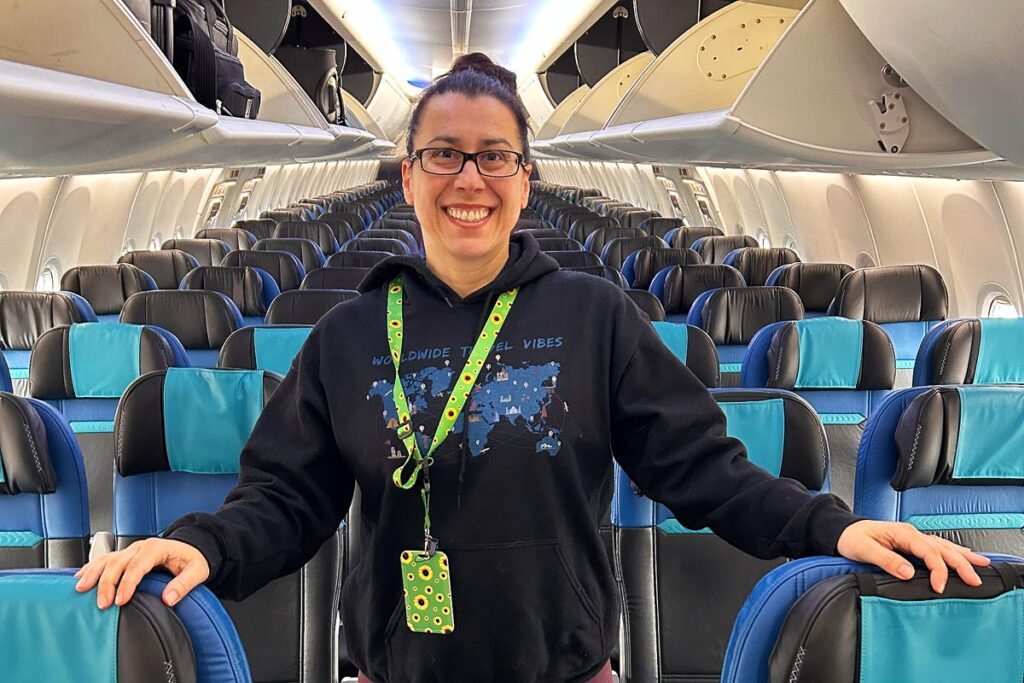
Speak up for your own accessibility needs. Everyone’s situation is different, so don’t assume the airline knows what you require — tell them.
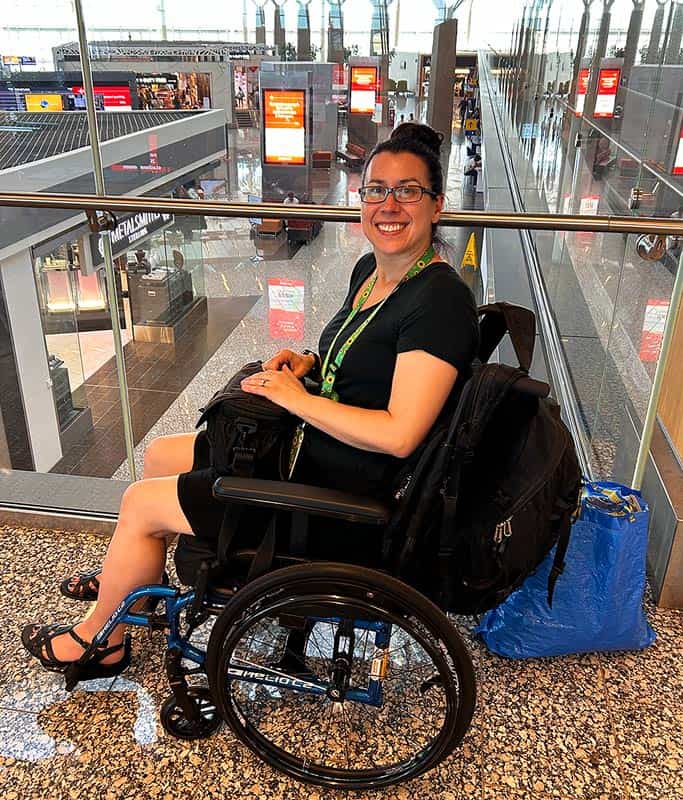
If you travel with invisible disabilities like I do, you can also wear the Sunflower Lanyard.
Many international airports participate in the Hidden Disabilities Sunflower program. Wearing it is a discreet way of signaling to airport staff that you have a non–visible disability and may need extra assistance or extra time to board the aircraft.
I wear my Sunflower Lanyard on international flights and appreciate the quieter, more subtle way it communicates my accessibility needs.
👉You can get a lanyard at participating airport customer service desks or by visiting this website.
2. Know Your Rights
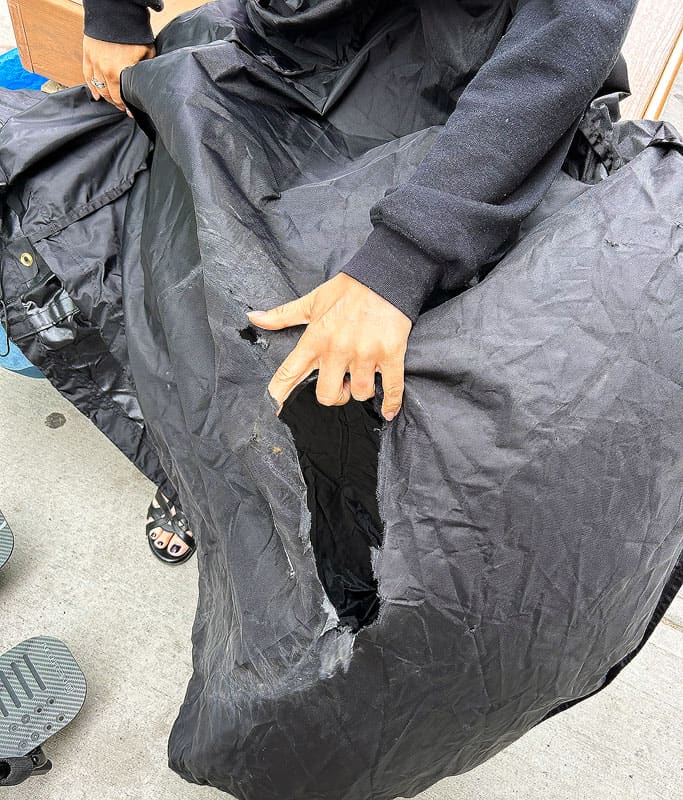
👉If your wheelchair is damaged after a flight, file a complaint before leaving the airport.
On my return flight from Italy, my wheelchair cover was torn. Thankfully, the chair itself was fine, but I reported it right away.
The airline asked us to send before and after pictures, which we did once we got home. We were fully reimbursed with a new wheelchair cover.
Review Airline Policies Before Flying
Every airline has different rules for handling damaged mobility equipment and policies for what they’ll cover. Some airlines have caps on reimbursement, so always check before booking.
3. Arrive to the Airport Early

One of the best ways to survive a flight with a disability is to arrive early.
Give yourself plenty of time to check in and talk to the ticket agent about your accessibility needs.
Security checks can be lengthy — my chair was nearly taken apart on our way to Iceland! Having that extra time means you won’t feel rushed or stressed.
Most airports also have disability lines, which can help speed up the process.
Still, you’ll want plenty of time to navigate security, find your gate, and get settled before boarding. Aim to arrive 2–3 hours before departure, depending on your destination.
4. Provide Care Instructions
Give both verbal and written instructions about how to fold, store, and handle your wheelchair.
I also email my wheelchair’s specs to the airline after booking to make sure everything is clear in advance.
5. Choose the Right Flight
Consider the plane size, restroom accessibility, and the number of layovers before booking.
Do your research: check customer service history, flight paths, and accessibility reviews to find an airline that best fits your needs.
Resources like TripAdvisor, Facebook groups, or this article on the best and worst airlines in 2024.
👉Join my Accessible Explorers Facebook Group here!
Some travelers prefer nonstop flights to avoid extra transfers and minimize wheelchair handling.
Since I have fibromyalgia and chronic fatigue, I prefer stopovers so I can give my body a rest and check my wheelchair between flights.
Book flights in advance to help save money on your trip and ensure you have the right flight for your body.
6. Notify the Airline in Advance
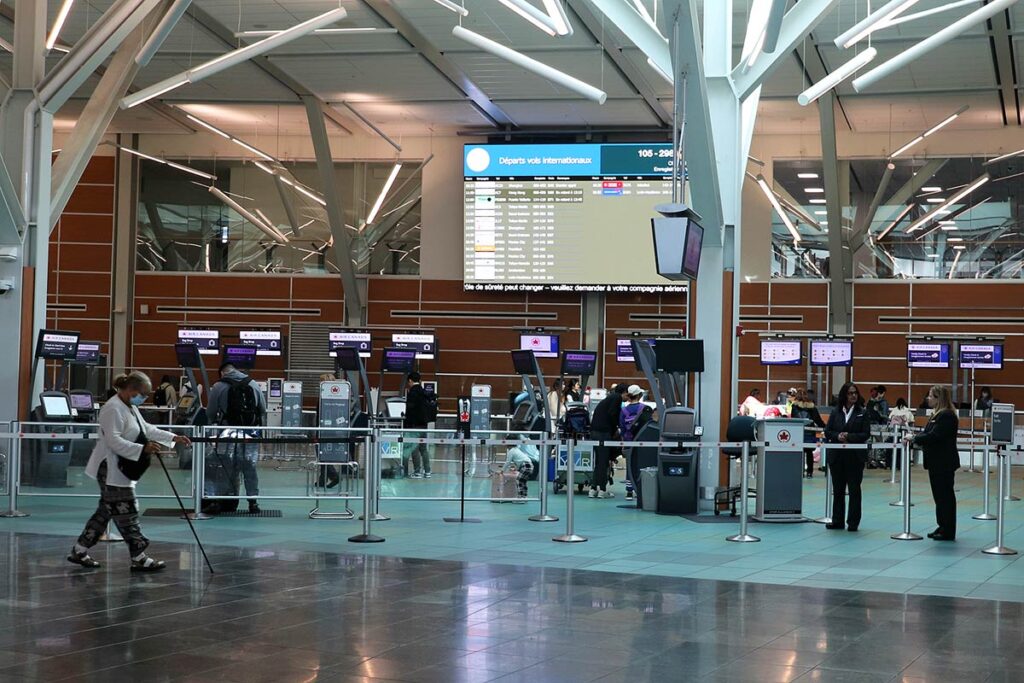
Always notify the airline of your accessibility needs in advance, including any mobility or medical equipment like a breathing ventilator.
Also let them know if you will be flying with a CPAP machine.
Requests to Make When Booking a Ticket:
✔️Airport escort
✔️Aisle wheelchair
✔️Wheelchair assistance
✔️Medical devices (like a ventilator)
✔️Traveling with a caregiver
We always call the airline directly and speak to an agent, so my wheelchair specs and accessibility requests are in the system and attached to my booking.
If you book online through Skyscanner or Expedia, then I recommend calling the airline directly once the booking is complete.
Flying with a Breathing Device
If you travel with a ventilator, notify the airline accessibility department at least two weeks before your flight.
You will need to inform them that you require a ventilator during all phases of the flight.
Each airline may have slightly different requirements for traveling with medical devices, so speaking to a representative will clarify what documentation you may need.
7. Bring Spare Parts
If possible, pack spares for unique or fragile wheelchair parts.
Even something small — like an extra joystick knob, cushion cover, or armrest — could save your trip if something breaks.
I haven’t had to do this yet, but it’s excellent advice I’ve heard from other travelers.
8. Prepare & Protect Your Wheelchair

Add a durable tag with your contact information to your wheelchair before traveling.
Remove fragile parts such as joysticks, footrests, and cushions, and carry them onboard. This reduces the risk of damage.
We keep all my removable parts in one collapsible bag and place a protective cover over my wheelchair before boarding.
➡️Manual chairs: fold and secure the back and remove the wheels if possible.
➡️Power chairs: follow manufacturer instructions to power down the system and disconnect the battery if required. Some larger chairs must go in cargo, so confirm with the agent during check-in.
9. Take Photos Before the Gate
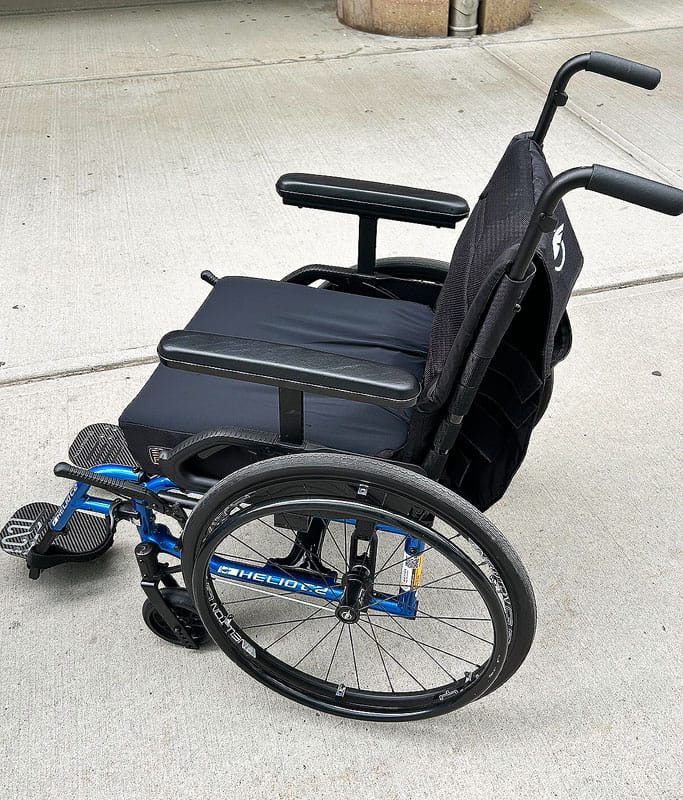
👉Always take photos of your wheelchair before gate-checking.
Snap close-ups of key parts (like the joystick, footrests, and wheels) as well as a full chair photo. This way, if damage happens, you have proof of its condition before the flight.
10. Gate Check Your Wheelchair or Scooter
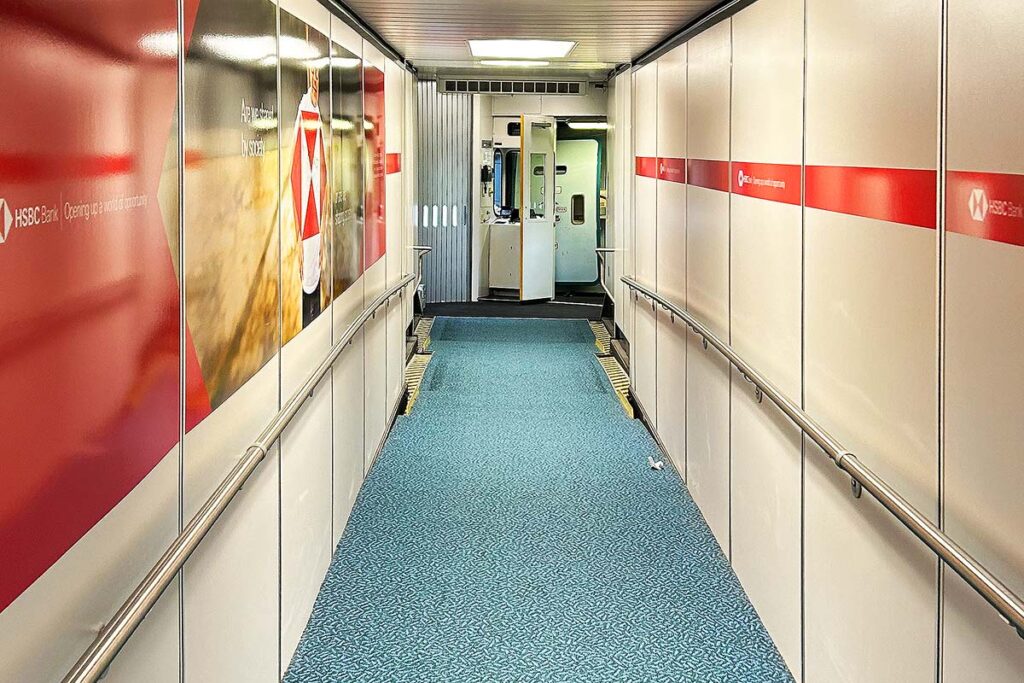
During check-in, you have the option to check your mobility device along with any luggage you have. Don’t do this!
👉Always gate check your wheelchair or scooter.
This allows you to use your chair through the airport and hand it off right at the aircraft door, which usually means less handling and risk.
How to Gate Check Your Wheelchair
✅Tell the check-in agent you want to gate check your wheelchair. They’ll tag it so baggage staff know you need your chair immediately upon arrival.
✅When boarding, fold your wheelchair (if possible) and leave it beside the aircraft door. Gate staff will then load it into the cargo hold.
✅Upon arrival, your wheelchair should be returned to the aircraft door, alongside strollers and other gate-checked items.
There’s never a full guarantee that your wheelchair will be safe, but gate checking significantly improves your chances of a smoother experience. 😉
11. Boarding the Aircraft with a Wheelchair
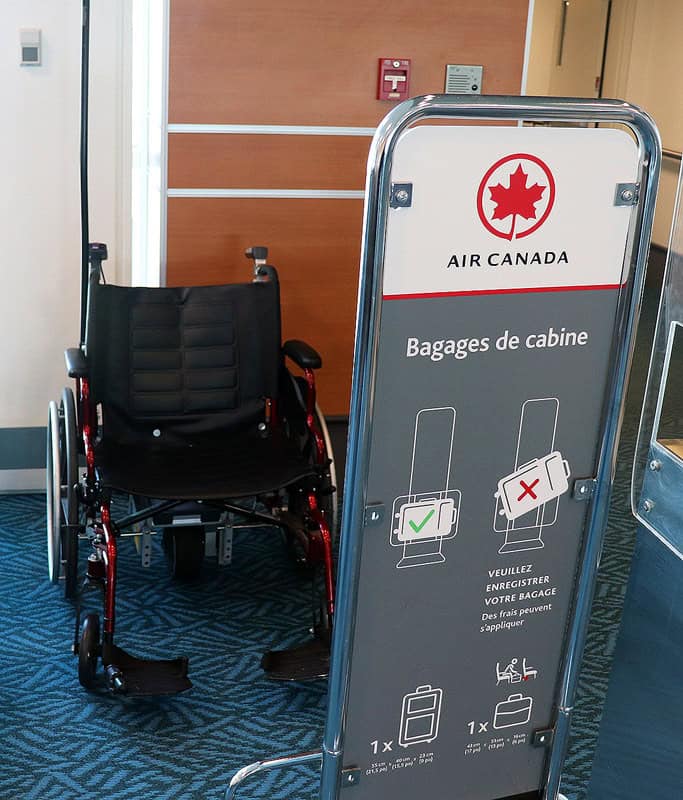
Once you arrive at your gate, ask the agent about pre-boarding.
Reasons to Pre-Board Your Flight:
✔️Prepare your wheelchair for gate check
✔️Get assistance to your seat (if needed)
✔️Stow small mobility items like a cane/walker
✔️Get settled in your seat
👉Most airlines allow you and your companion to board early.
Speaking with the gate agent ahead of time also ensures any special arrangements — using an aisle chair, additional seat strap, or seat-to-chair transfer help — are ready when you need them.
12. Pack a Carry-On Essentials Bag
Keep must-have items with you in case your wheelchair is delayed or damaged. This way, you won’t be stranded without the essentials.
Essential Flight Items:
➡️Medication
➡️Seat cushion
➡️Tools & zip ties
➡️Medical equipment
➡️Important Documents
➡️Pain Relief Resources
13. Check for Damage Immediately

After landing, gate-checked wheelchairs are usually returned at the aircraft door once all passengers have disembarked.
While it can be a long wait, this is often the best time to reattach any parts you removed without feeling rushed.
👉Inspect your wheelchair immediately, especially before leaving the airport.
If it’s damaged or lost, locate the airline’s Complaint Resolution Official (CRO) right away.
Document everything with photos, keep any tags or paperwork, and request a temporary mobility device if needed.

♿Wheelchair Assistance at the Airport
If you don’t travel often, requesting wheelchair assistance at airports can feel confusing.
When planning a trip with chronic illness or disability, it’s worth including airport assistance in your plans. How smooth your travel day goes often comes down to the support you receive at the airport.
Whether or not you bring your own wheelchair, requesting assistance when you need it can make a big difference.
Here’s what you need to know:
How Does Wheelchair Assistance Work at Airports?

Requesting wheelchair assistance means airport staff can escort you (and your caregiver) through check-in, security, and all the way to your gate.
Different Types of Airport Assistance
Wheelchair assistance can make your travel day much easier. Depending on the airport and your needs, staff may:
- Push you in an airport wheelchair if you don’t have your own
- Bring you to your gate using a motorized airport cart
- Accompany you through security
- Escort you to the aircraft door for independent boarding
- Help you onto the aircraft or an aisle chair
- Meet you at the aircraft upon arrival
- Ensure your wheelchair is ready for you
- Guide you through customs and to baggage claim
Whether it’s a domestic or international flight, I’ve used wheelchair assistance for over five years. The experience can vary by country, but the goal is always the same: a smoother travel day!
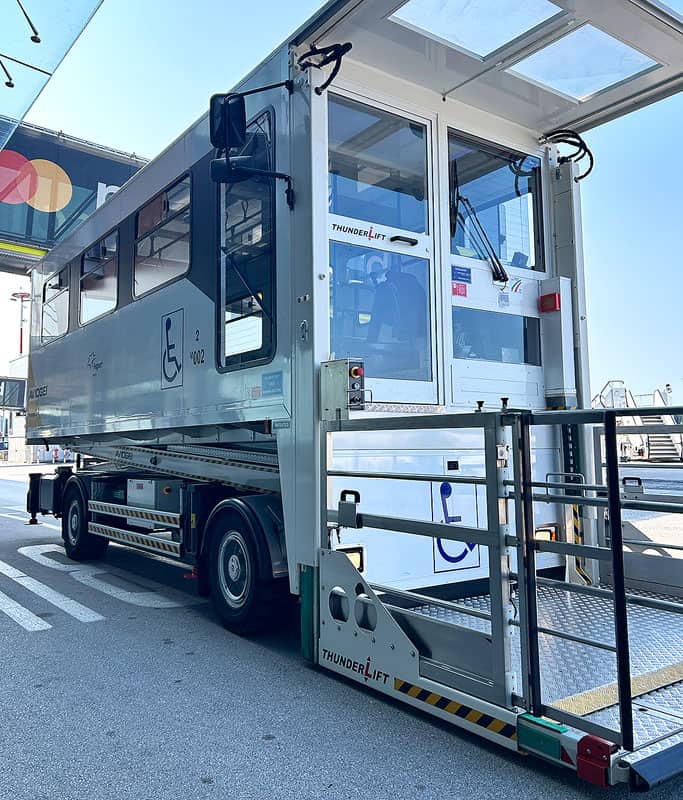
Here are a few examples of the different airport assistance I have used:
✅On my flight from Vancouver to Tokyo, we were driven through security and to our gate on a motorized wheelchair cart.
✅In Malta, an attendant pushed my wheelchair through customs and the airport, which made the process much less stressful.
✅ In Slovenia, we were escorted to the Thunder lift, a machine designed to lift wheelchair users to an aircraft door to avoid a staircase.
Airports that frequently require passengers to get on a bus to board the aircraft should have one of these.
How to Request Wheelchair Assistance in Your Booking
It’s best to request wheelchair assistance when booking your flight by speaking directly with an airline agent.
If you book online, call the airline’s accessibility department after your reservation is complete to ensure your request is properly recorded.
When Do I Get Assistance at the Airport
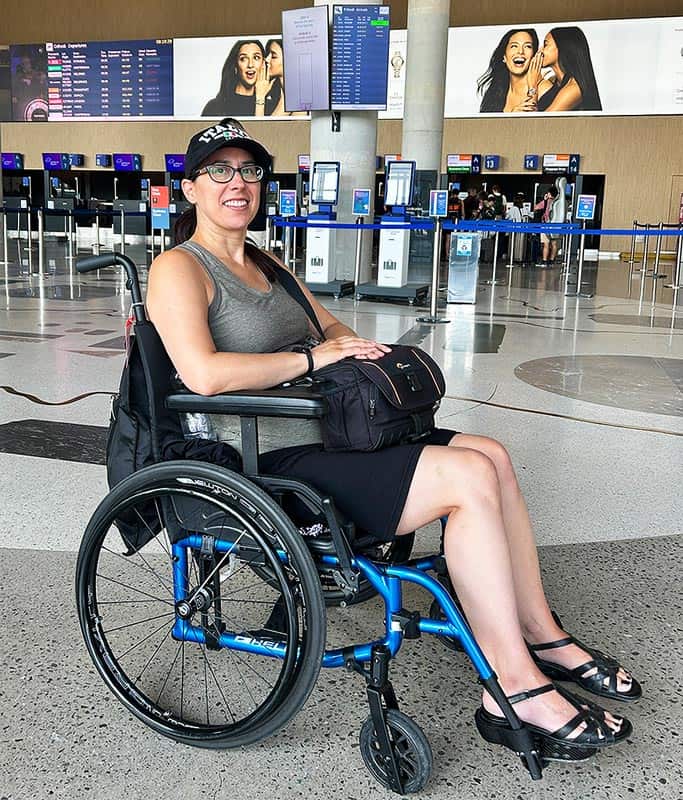
Upon arrival, check in at the airline counter and confirm your assistance request. Staff will then guide you through the airport.
Wheelchair assistance includes help through airport security. Make sure to let agents know about any medical implants or devices.
You can also ask whether alternative screening may be required (e.g., pat-down, swab). Many airports have disability access lanes or special screening lines to make this easier.

Final Thoughts: Flying with a Wheelchair
Flying with a wheelchair isn’t always easy — and sometimes, despite every precaution, things can still go wrong. But planning ahead, knowing your rights, and taking a few extra steps can make the experience much smoother.
Remember: most people are kind and want to help. Don’t let a few negative stories stop you from exploring! Travel is worth it, even with the risks.
I hope these tips give you more confidence to take that trip, knowing you’re doing everything possible to protect your equipment and advocate for yourself.

Read More Travel Tips
12 Tips for Air Travel with Chronic Pain & Fibromyalgia
13 Tips for Traveling with Fibromyalgia & Chronic Pain
How to Plan a Trip With Chronic Pain & Fibromyalgia
14 Travel Tips: How to Spend Less While Traveling
12 Creative Vacation Booking Tips to Save You Money
